
SOLAR: THE BASICS
How Does Solar Work?
Solar energy systems work by turning sunlight into usable electricity for your home or business. During the day, solar panels collect energy from the sun and send it to an inverter, which converts the energy into electricity your property can use to power everyday items like lights, appliances, heating, cooling, and electronics.
Any electricity your home or business needs is used first from the solar system before pulling additional power from the utility grid. When your system produces more electricity than you are using at that time, the excess energy is sent back to the utility grid.
Solar systems work quietly in the background throughout the day, helping reduce dependence on traditional utility power while lowering long-term energy costs.

1
Sunlight hits the Solar Panels and the photovoltaic (PV) cells in the panels convert the sunlight into an electric current (DC).
2
The electric current flows to the inverter(s), which converts DC electricity to AC, the most commonly used form of electricity.
3
The AC electricity flows from the inverter(s) to the breaker box, which directs the current to any appliance in the building that is using electricity.
4
Any unused electricity produced by the solar flows through the utility meter into the grid.
A South-Facing solar array produces over 90% of its daily energy output during a 6-hour time window (roughly 3 hours before, and 3 hours after high-noon). Therefore, a solar array providing a 100% energy offset for a home or business will produce nearly 24 hours-worth of energy during just a few hours in an average day.

Battery Storage & Energy Independence
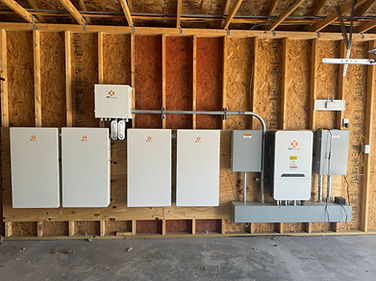
Battery storage systems allow you to store excess solar energy for later use instead of sending all unused energy back to the grid. The stored energy can then be used during the evening, on cloudy days, during periods of high utility rates, or when a power outage occurs.
While batteries are often associated with backup power during blackouts, they can also help increase energy independence by allowing you to rely more on your own stored solar energy instead of utility electricity. Depending on the battery system and customer goals, batteries can help power essential circuits, reduce grid reliance, and provide additional control over how energy is used throughout the day.
Our team can help determine whether battery storage may be a good fit based on your energy usage, utility provider, and long-term goals.

.jpeg)


What Happens at Night?
Solar systems do not produce electricity at night, so the property pulls electricity from either the battery system (if installed) or the utility grid.